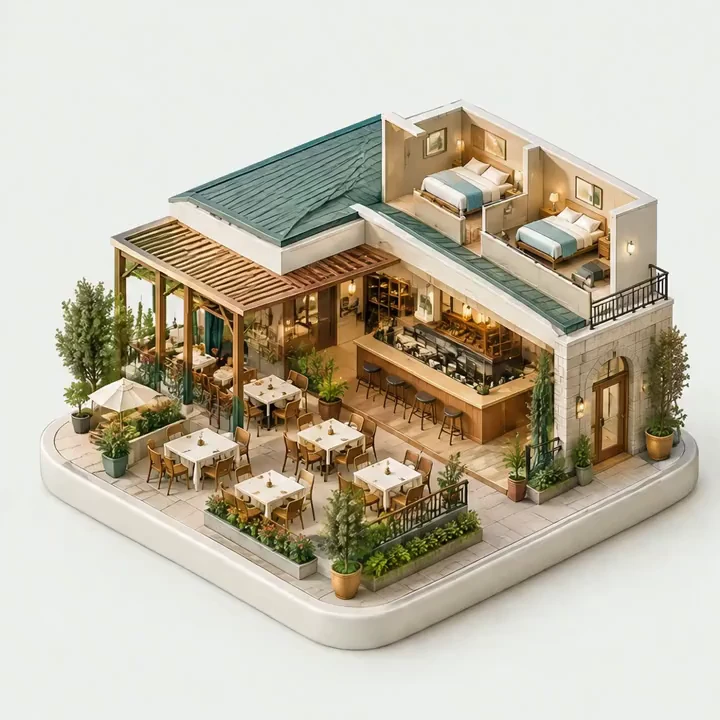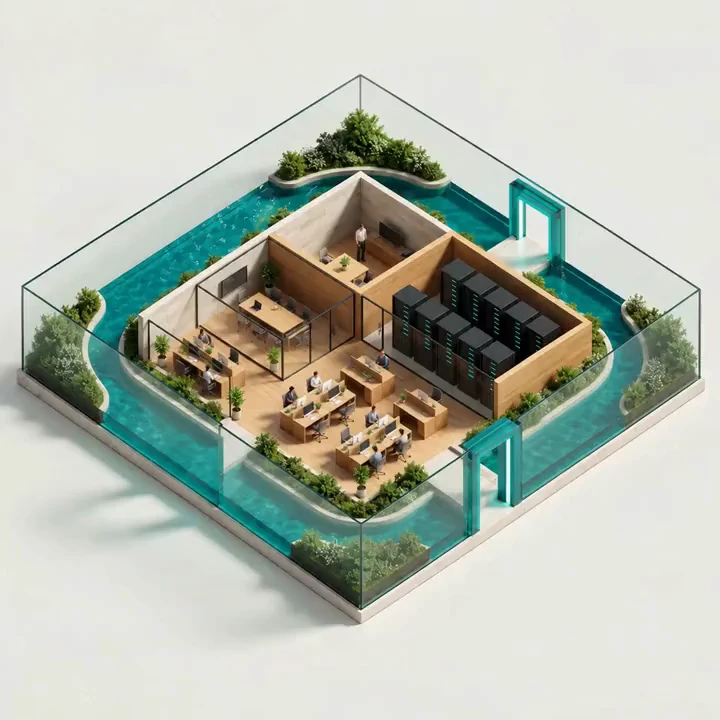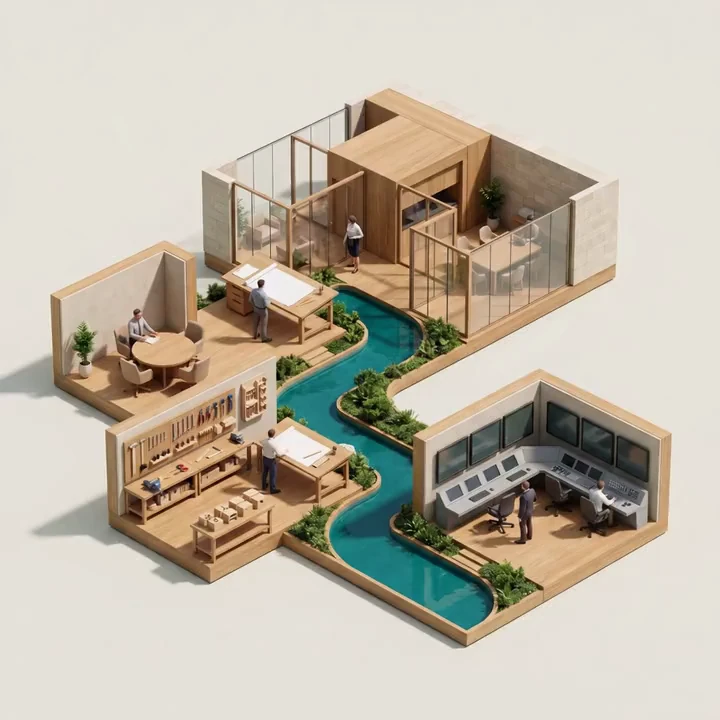

Hospitality work moves between the floor, the office and the next shift. This ProcessRoot build brings those parts into a shared operating environment: a place to review the day, notice an exception and connect it to responsible action. Its breadth comes from the work of running venues.
What to take away
- The platform connects operating information with briefings, tasks and role-specific access.
- Nine AI operators provide different views of the work while people retain important authority.
- The published capability count describes features within one platform, not separate client projects or measured results.
An operating picture that follows the shift
A sales figure, a staff issue and a maintenance request may arrive through different tools, but they meet in the manager’s working day. The platform was built around that reality. Its venue dashboard brings together measures including sales, covers, average check and labor, alongside guest signals and operational context.
Pre-shift and nightly briefings give those details a place in the rhythm of service. Leaders can review an individual venue, inspect an issue or ask a question without treating each information source as an entirely separate task. The purpose is to connect the picture to the work that follows.
A flag becomes a piece of work
The implemented detection capabilities include unusual voids and comps, rising labor percentage, abnormal inventory movement and recurring themes in reviews. Detected issues can become prioritized tasks assigned to the relevant AI operator. Duplicate suppression helps prevent the same flag from repeatedly appearing as new work.
A flag is a reason to look, not a conclusion about why something happened. That distinction matters in a business where a busy shift, an event or a change in staffing can affect the numbers. The platform supports attention and follow-through; it does not remove the need for operating judgment.
The floor and the office share the system
The delivered work extends beyond reporting. It includes prep and station checklists, inventory counting, maintenance boards, hiring and onboarding workflows, and corrective-action records. Access follows staff roles and the venues they work in. Different people can use relevant parts of the same environment.
Nine specialized AI operators provide role-oriented ways to work with the information. They can use operational data and a venue knowledge base, retain context, and accept corrections from owners. Those role names organize the software’s responsibilities; they do not turn it into a substitute for accountable human leadership.
Existing tools remain part of the operation
The platform includes connections across point of sale, payroll, scheduled labor, reservations and task tools, together with structured uploads and report intake. A customer connection depends on the systems and access available to that customer. An integration listed in the platform is not a claim that every venue uses every connection.
Monitoring and action proposals are distinct. Owners can review proposed changes, and execution leaves a record. Payroll and vendor payments are not permitted to execute autonomously in the platform. These boundaries are part of making the operating relationship understandable, particularly where the work can affect staff or suppliers.
What this build demonstrates
The current public catalogue describes 138 implemented capabilities across 20 platform areas and nine specialized AI operators. These are features within the hospitality system. They are not 138 customers, projects or independently measured improvements. The story describes delivered scope without publishing confidential identities, interfaces or operational data.
For another operator, the useful thing to examine is how information becomes a task: what is highlighted, who sees it and what action is allowed. The platform brings those questions together across venue reporting, practical staff workflows and proposals that people can review.
The useful question for another operator
Your venue may need only one part of that picture: a briefing people use, a maintenance handoff that stays visible, or a clearer way to review recurring issues. Start with the work you want to improve, then examine the information and responsibility around it.
Ask which existing tools would connect, who would review exceptions and how you would recognize a useful result. A broad platform shows what is possible; your own operation determines which part deserves to be built first.
Common questions
Is this an off-the-shelf package for every venue?
This is a delivered custom platform story. A new engagement is scoped around the venue’s systems, work and access requirements.
Does the platform let AI make payments?
The published platform description prohibits autonomous payroll and vendor payments. Important authority remains with people.
Sources & further reading
Make it useful for your business.
Bring us the task that keeps getting in the way. We will help you understand what could change, what should stay with your team, and whether the work is worth doing.
Talk about your business